The QGQ 4/6 Inch Cutter carries no forward jet at all: three M5 jets at 45 and 30 degrees exist to spin the head and pull the tool along, while blades and a centrifugally thrown chain do the cutting. How it works, how the same body swaps between 4-inch and 6-inch pipe, what comes in the box, and when to reach for a different nozzle.
There is a category of blockage that high-pressure water refuses to move. Ten years of hard water has turned a drain wall into something closer to stone. A root has come through a joint and woven itself into a rope. Neither problem is a lack of pressure — it is a lack of anything mechanical touching the pipe wall.
That is the job the 4/6 Inch Cutter Nozzle (Part# QGQ) was built for. It carries no forward jet at all: three rear jets exist to spin the head and pull the tool along, and the actual cutting is done by blades and a length of chain swinging against the bore. This guide covers how the hydraulics and the mechanics divide the work, how the same body changes between 4-inch and 6-inch pipe, what comes in the box, and where you should be using something else.
The idea in one line
Take a rotating jetting nozzle, put a chain on it, and you have a tool that cleans the whole circumference of a pipe rather than the small arc a fixed cutter can reach.
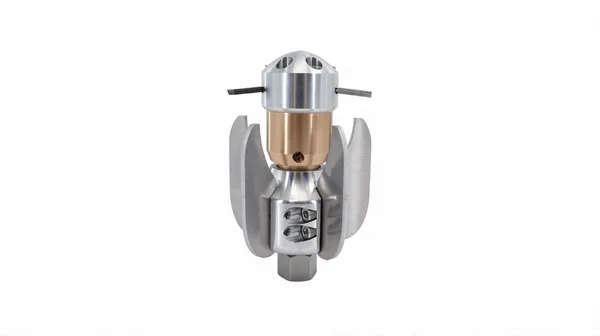
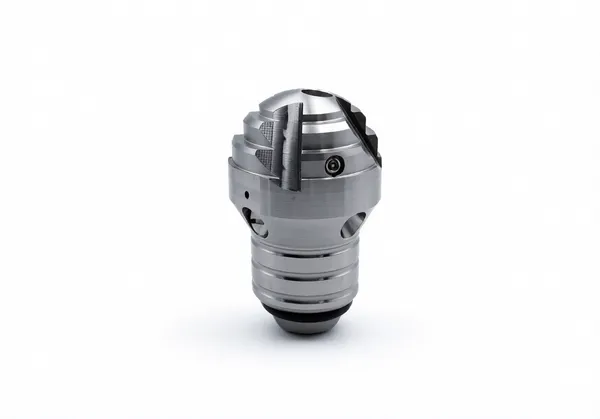
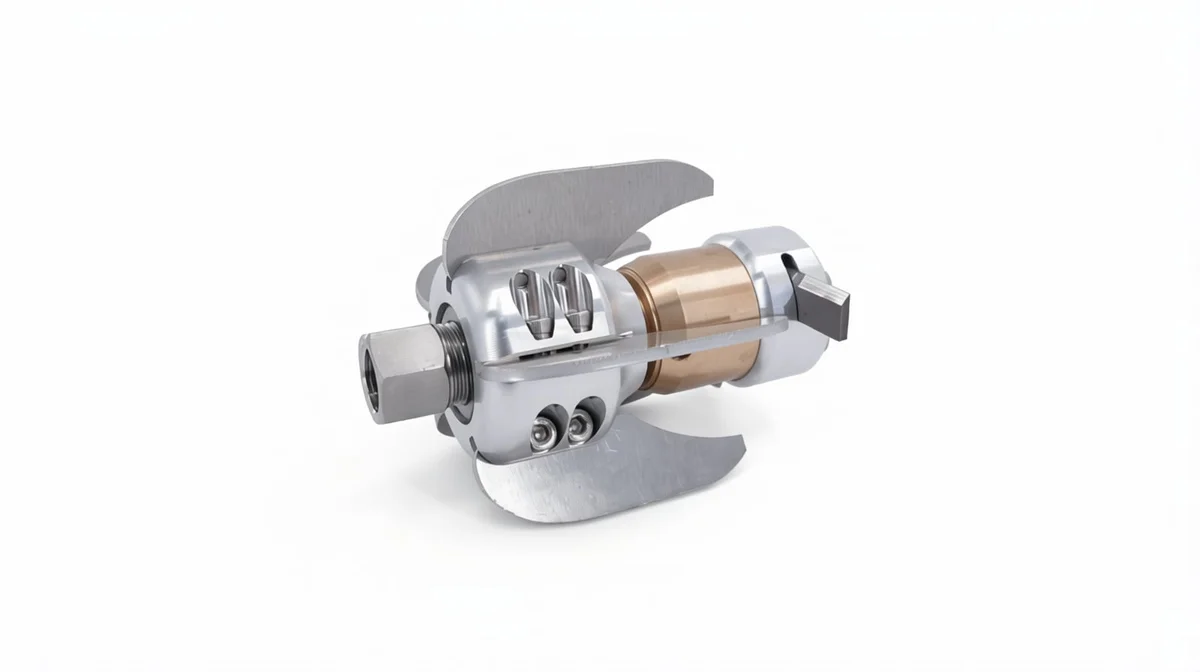
The body is aluminium, Φ56 × 125 mm overall, and weighs 1.7 kg. Around its midsection sit the curved vanes and the jet seats; below them, a hexagonal hose thread. The head at the far end carries the three orifices and a slot for the blade. Everything that does damage is on the outside of that head.
Three jets, no forward jet
The specification is unusual and worth reading carefully: 3 × M5 jets, set at 45° and 30° to the axis, and no forward jet at all.
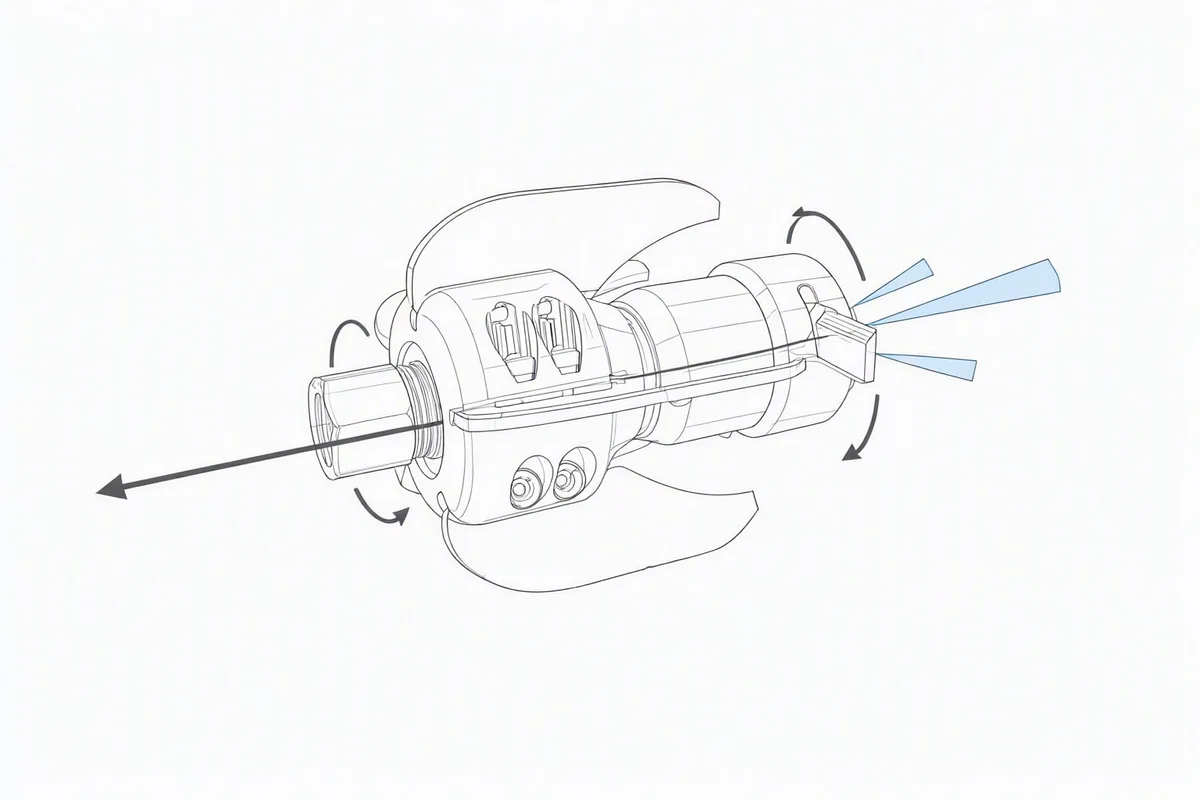
Each jet leaves at an angle rather than straight back, so its reaction has two components. One pushes along the axis and drags the tool forward through the pipe — you are not feeding it length by hand. The other is a turning moment around the axis, and that is what spins the head.
The missing forward jet is a deliberate choice, not an omission. A chain cutter works on the pipe wall, not on the face of a blockage; the water is better spent entirely on rotation and propulsion. It also means the tool cannot be used to punch through an obstruction from a distance — you have to get it to the blockage first, which is where a penetrator or a smaller rotating nozzle earns its place in the same van.
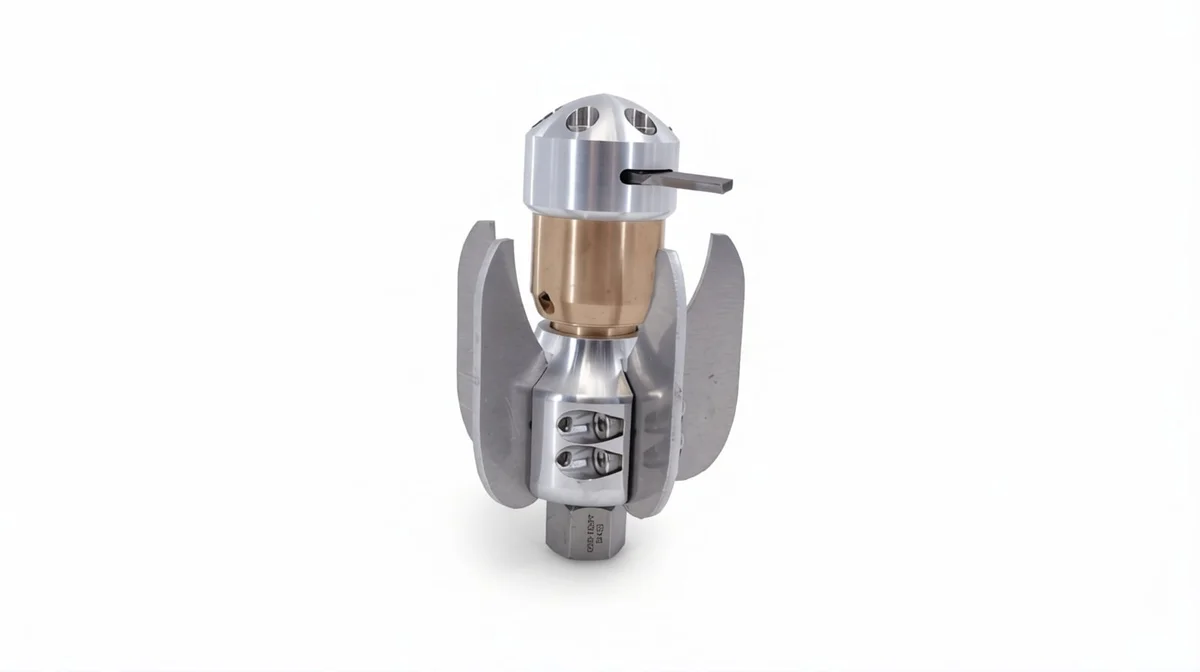
What actually does the cutting
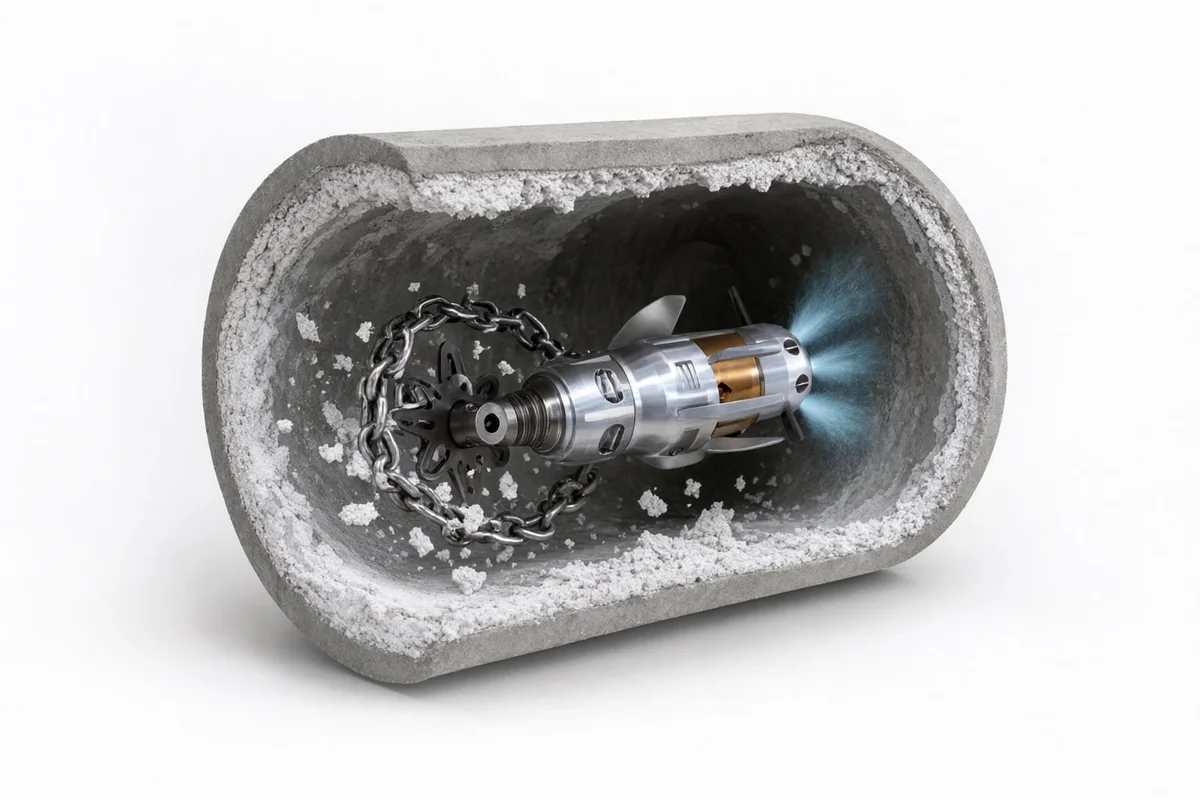
Two things cut, and they cut differently:
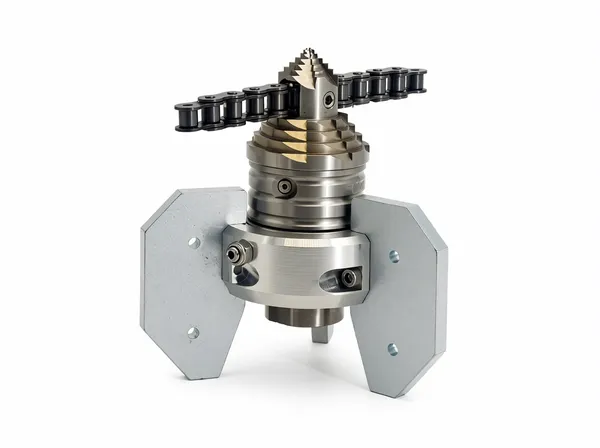
- The blades are fixed to the head and set a short distance off-axis. They score and break the crust as the head turns, and they also act as the stop that keeps the chain from wrapping back onto the body.
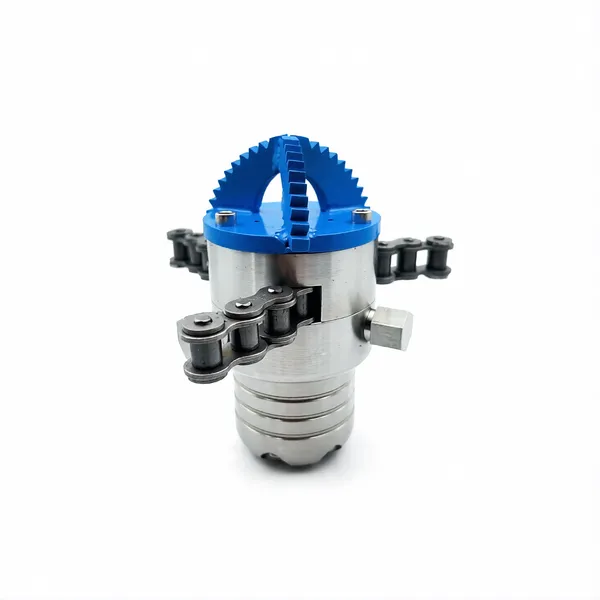
- The chain is the working surface. At rest it hangs inboard; once the head is turning, centrifugal force throws it out against the pipe wall, where it whips the full circumference at a radius larger than the body itself.
That combination is why a chain cutter handles deposits a fixed blade cannot. A rigid cutter reaches only where its own geometry reaches, and it has to be steered. A swinging chain finds the high and low spots of the same bore on every revolution, and it follows irregular walls — which matters because old clay and concrete drains are not actually round.
One body, two pipe sizes
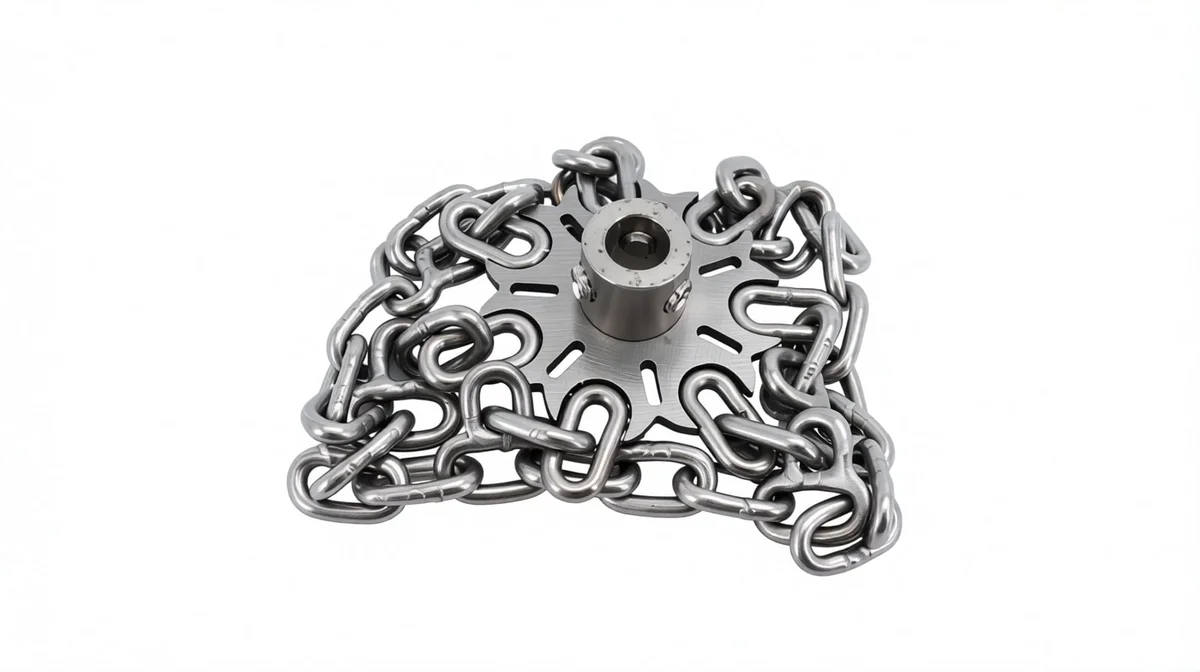
The kit is built so that the diameter is a setting rather than a different nozzle. Brackets, blades, chain holder and chains each come in a 4-inch set and a 6-inch set, and they swap onto the same body. The bag in the parts photo is marked DN150 — the larger set — with the retaining pins and the blade hardware alongside.
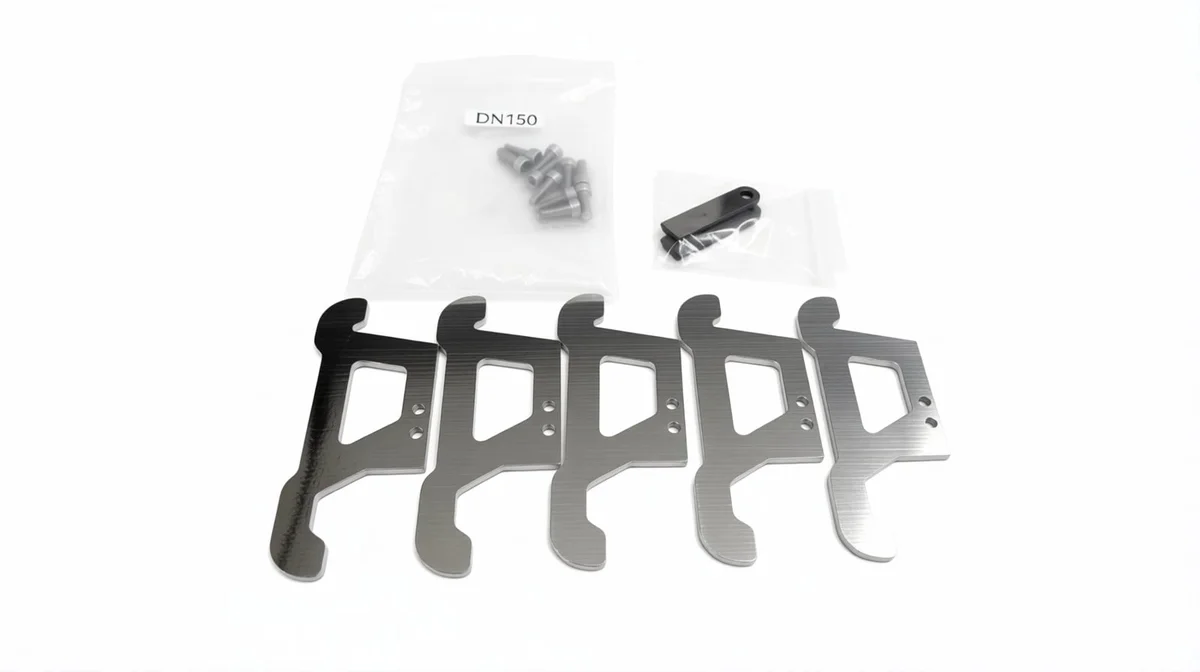
The practical effect is visible in the two bores below: in the smaller pipe the chain is only partly thrown out and still reaches the wall; in the larger one the same tool runs at full reach.
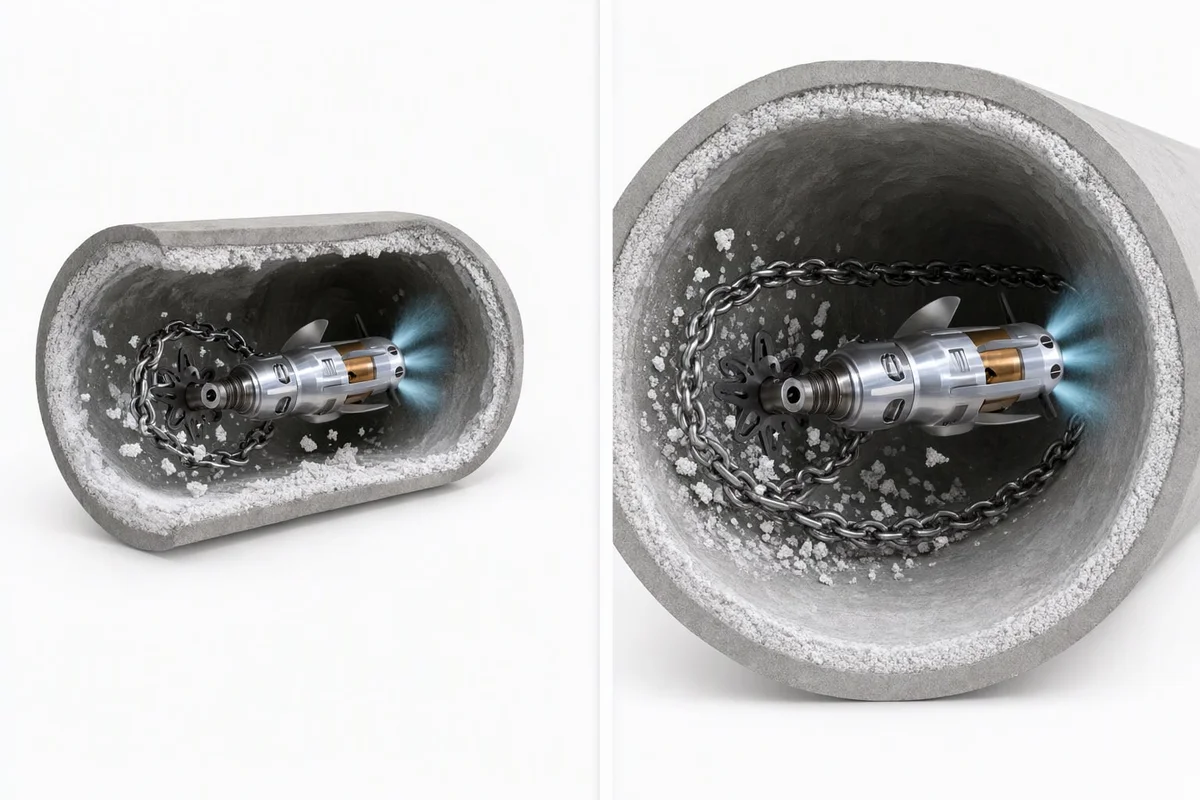
The internal water path is what makes the swap cheap: the cutaway shows the brass sleeve as the rotating interface between the fed hose and the spinning head. Nothing in the changeover touches it.
Specifications and operating points
| Item | QGQ 3/8" | QGQ 1/2" |
|---|---|---|
| Working range | DN100–DN300, 4" and 6" head sets | |
| Hose connection | 3/8" female | 1/2" female |
| Rotating jets | 3 × M5 at 45° + 30° | |
| Recommended pressure | 210 bar | 270 bar |
| Recommended flow | 30 LPM | 40 LPM |
| Body | Aluminium, Φ56 × 125 mm, 1.7 kg | |
Those pressure and flow figures are the recommended pairing for each thread size, not a fixed limit — flow and working pressure are customised to your jetting unit. A trailer machine with a heat exchanger and a small petrol unit are not the same tool at the nozzle, and the orifices should not be identical either. Tell us the pressure and flow at your pump outlet and we match them.
What's in the box
- 1 × main body
- 1 set of 4" brackets and 1 set of 6" brackets
- 1 set of 4" blades and 1 set of 6" blades
- 1 × chain holder, sized for 4" / 6"
- 1 set of 4" chains and 1 set of 6" chains
- Retaining pins and blade hardware, bagged and marked by size
The chains and blades are consumables and should be ordered as spares, not as a second nozzle. Check them at the first sign of a drop in coverage: a chain that has shortened from wear stops reaching the wall long before it looks wrong.
When not to use it
- Small-bore laterals. Φ56 with the chain thrown out is a medium-bore tool. For 3-inch and below, a compact rotating nozzle does the same job with less machine behind it — see the Tapered Bulb Nozzle.
- Blockages you have not reached yet. No forward jet means no penetration at range. Open the path first.
- Large municipal mains. The reach and the water volume are both in the wrong class; a Chain Pagoda Nozzle or a penetrator is the right end of the rack.
- A dense root ball in a big bore is a cutting job before it is a scraping job — the Root Cutter Nozzle severs, this tool then cleans what is left.
Watch it work
The clip embedded at the top of this page is the chain cutter running in service. There is also a shorter vertical video of it going through root blockage: Chain Cutter vs roots (YouTube Short).
For the wider question of which nozzle matches which blockage type, two of our other guides are worth reading alongside this one: breaking through hard scale, lime and roots and selecting the right sewer nozzle. The full product record is at 4/6 Inch Cutter Nozzle, and the rest of the range is under sewer nozzles.
If you are matching this tool to a specific machine and a specific pipe, send us your pump pressure and flow, the pipe material and the diameter — we will confirm the thread size and the orifice set before you order.
Horizon Integrity
産業用洗浄装置スペシャリスト · Horizon Integrity